Wastewater treatment plants
flow systems of underground bed of reeds
Plants for the treatment of waste water
Information on the plants and wastewater treatment
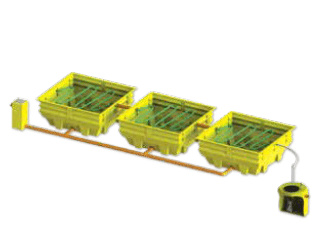
The constructed wetlands the flow of the underground are used for the wastewater from homes and business that are not included in the public sewage system or into a body of surface water.
The wastewater entering the system are distributed allwithin a series of beds, each containing a suitable number of plants. The treatment process takes advantage of the properties of evapotranspiration in the soil, either directly or through plants, and theabsorption of the organic content of the wastewater to be part of theroot system of the plants themselves. Lthe only water that comes out of the system is lrainwater, which occurs only in the case of a thunderstorm. This water is, however, considered to be sufficiently diluted, and can then be discharged through the overflow pipe of the system or returned to mount an adequate pumping station recirculation, thus ensuring that no waste water can escape from the system. These systems can be integrated with pre-treatments to improve theoverall efficiency of the treatment, depending on the properties of thetributary. The flow systems underground are particularly suitable for the community of small to medium-sized, as they offer the following advantages:
the process of the simplified treatment;
standards of effluent quality is very high and
the problem of the discharge of the effluents deleted;
easy to manage and maintain;
the consumption of electric energy equal to zero;
chance to expand the system over time without substantial
investment, resulting in a system is extremely
easy to manage.